

The quick answer
An 11-month builder warranty inspection is an independent inspection of your new home about a month before the one-year warranty ends. Use it to document settling cracks, grading and drainage problems, roof and attic issues, plumbing leaks, electrical defects and HVAC performance after a full year of real use. Then send the builder one organized, photo-documented list before the deadline. Some people call it an eleven-month inspection. It is the same thing.
We inspect a lot of first-year homes in the newer subdivisions of Marietta and West Cobb, Kennesaw, Powder Springs, Woodstock and Cumming. The same items show up again and again, so this checklist is built from what we actually find.
Why month 11 is the right time
Most one-year warranties require you to report defects in writing before the anniversary of closing. If you inspect too early, some problems haven't appeared yet. If you inspect in month 12, you may run out of time to receive the report, organize the list and get it to the builder. Month 10 or 11 gives you a full year of seasons, including a Georgia summer for the air conditioning, while leaving time to meet the deadline.
Check your warranty booklet now for three details: the exact end date, how claims must be submitted (online portal, email or a form) and whether the builder offers its own 11-month walkthrough. A builder walkthrough is useful, but it is the builder looking at its own work. An independent inspection is the second opinion that catches what a quick walk misses.
What changes in a new home's first year
New homes move and adjust during their first year, which is why defects appear after closing:
- Lumber dries and shrinks, which causes nail pops, drywall cracks at corners and gaps in trim.
- The house settles onto its foundation, and doors that latched at closing start to rub.
- Backfill and landscaping settle, sometimes creating low spots that send water toward the foundation.
- Caulk and sealant shrink around windows, doors, tubs and countertops.
- The HVAC system works through its first full summer, which reveals weak airflow, condensate problems and rooms that never cool.
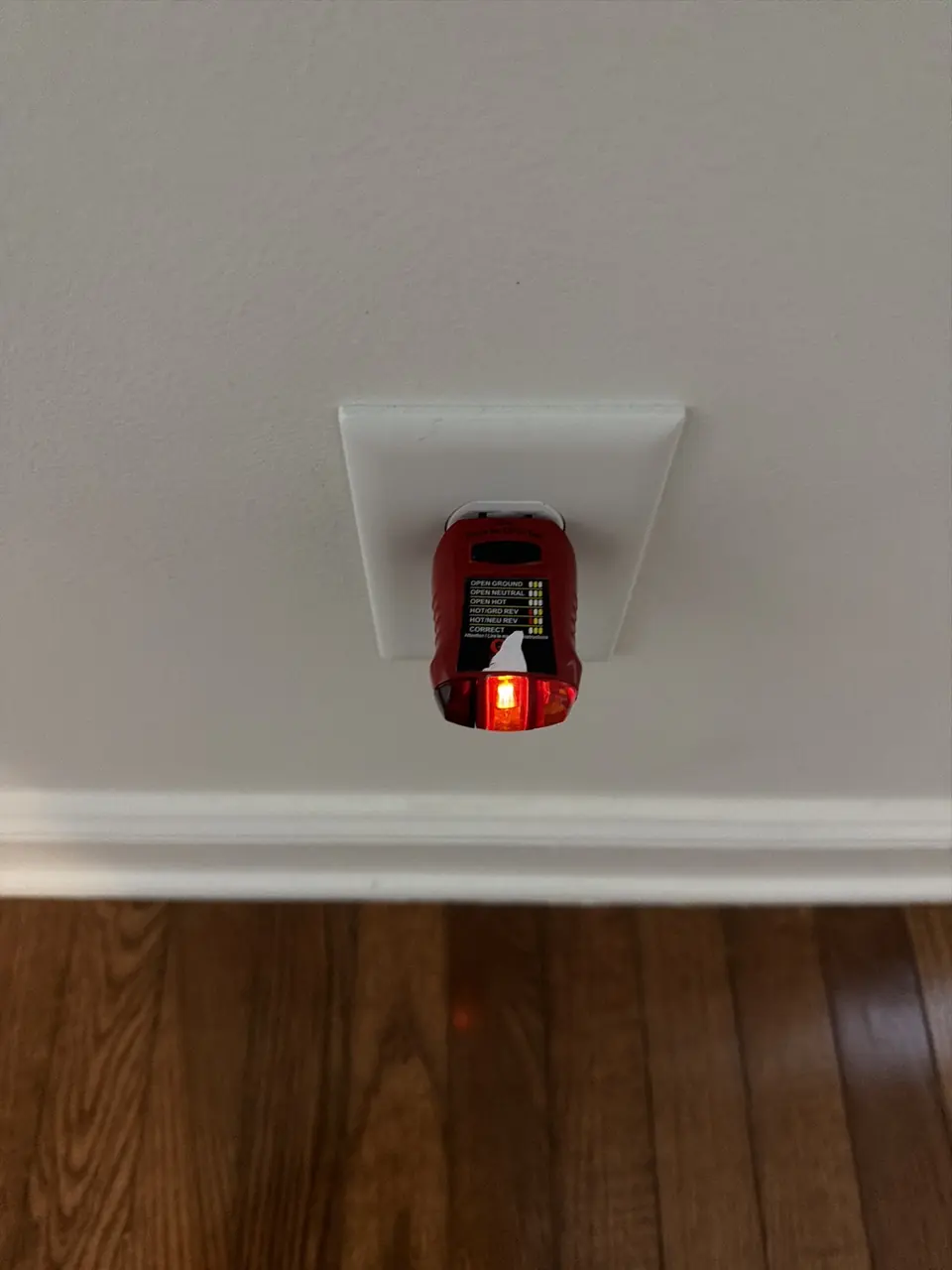
Simple checks like outlet testing are part of every warranty inspection. A failed GFCI or a reversed outlet is exactly the kind of item a builder should correct under warranty.
The 11-month warranty checklist
Exterior and grading
- Soil slopes away from the foundation, with no low spots that hold water after rain
- Downspouts discharge away from the house and connect properly to any drain lines
- Siding, trim and sealant are intact, with no gaps at windows, doors and penetrations
- Driveway and walkway cracks are noted, especially any with one side higher than the other
- Decks, steps and railings are secure
Roof and attic
- No lifted or missing shingles, exposed nails or damaged flashing
- No water stains on the roof decking in the attic
- Insulation is still level and complete, and bath fans vent outside
- Ductwork in the attic is connected, supported and sealed
Structure and interior
- Drywall cracks, nail pops and gaps at trim and crown molding
- Doors that rub, won't latch or swing open on their own
- Cracked tile or grout, loose flooring and squeaks
- Cabinet doors and drawers that are out of alignment
Plumbing
- Leaks under every sink, at toilets and at the water heater
- Drains that run slowly or gurgle
- Low water pressure or temperature problems at fixtures
Electrical
- Outlets that don't work, are reversed or have failed GFCI protection
- Light fixtures, switches and ceiling fans that don't operate properly
- Missing or loose cover plates and any warm devices
Heating and cooling
- Every room heats and cools, with a reasonable temperature difference at the registers
- The condensate line drains properly and the safety switch or pan is in place
- Unusual noises, short cycling or ice on refrigerant lines
What builder warranties usually cover
Every warranty is different, so your booklet is the final word. Many builders follow a common structure: one year of coverage for workmanship and materials, a longer period for major systems such as plumbing, electrical and HVAC, and a much longer period for major structural defects. The first year is the broadest, which is why it matters so much to document everything before it ends.
Items that are usually excluded include normal wear, damage caused by the owner, landscaping and problems from changes the owner made, such as drainage altered by new beds or patios. If you have changed the grading or added a sprinkler system, mention it, because the builder will ask.
How to submit your list so it gets fixed
- Submit in writing before the deadline, using the method your warranty requires.
- Send one organized list instead of a string of emails. Our report is built to be forwarded as the punch list.
- Include photos and locations for every item so nothing is misread.
- Keep copies of everything you send and every response you receive.
- Follow up on the schedule and confirm each repair is completed, not just started.
If you bought before the house was finished, a pre-drywall inspection and a final new construction inspection give you a record to compare against at month 11. Our new construction inspection checklist covers what to look for before closing.
To book your 11-month builder warranty inspection anywhere in metro Atlanta, including Marietta and Cobb County, Powder Springs and Cumming, call or text (678) 558-4222 with your closing date and we'll schedule it in the right window.