

The quick answer
You should get a sewer scope inspection if the home is about 30 years old or older, has large trees near the sewer line, has slow or gurgling drains, has been vacant or flipped, or sits in an older neighborhood where clay, cast iron or Orangeburg pipe is likely. A camera inspection takes a short time, and it is the only way to see a line that can cost thousands of dollars to repair.
Who is responsible for the sewer line
The pipe that carries waste from the house to the public sewer main is called the sewer lateral. In most of metro Atlanta, that private lateral is the homeowner's responsibility, often all the way to where it connects to the public system. That means a cracked, root-filled or collapsed line becomes your problem the day you close.
A standard home inspection evaluates the plumbing inside the house, but it stops at the foundation. The lateral is buried, so it can't be inspected without a camera.
Pipe materials by era
| Era of the home | Common sewer pipe | Typical concerns |
|---|---|---|
| Before the 1970s | Clay tile and cast iron | Root intrusion at clay joints, corrosion and scale in cast iron |
| About 1945 to 1972 | Orangeburg (bituminous fiber) | Deforms, blisters and collapses with age |
| 1970s to today | PVC and ABS plastic | Offsets, sags and damage from settling or construction |
Newer homes aren't automatically in the clear. We sometimes find construction debris, crushed sections or sags in lines that are only a few years old.
What the camera finds
- Root intrusion, which is common under the mature oaks and pines of older neighborhoods.
- Cracks and fractures that let water out and roots in.
- Offsets, where pipe sections have shifted out of line.
- Bellies or sags, low spots that hold water and waste.
- Collapsed or deformed sections, especially in Orangeburg pipe.
- Blockages from grease, wipes, debris or scale.
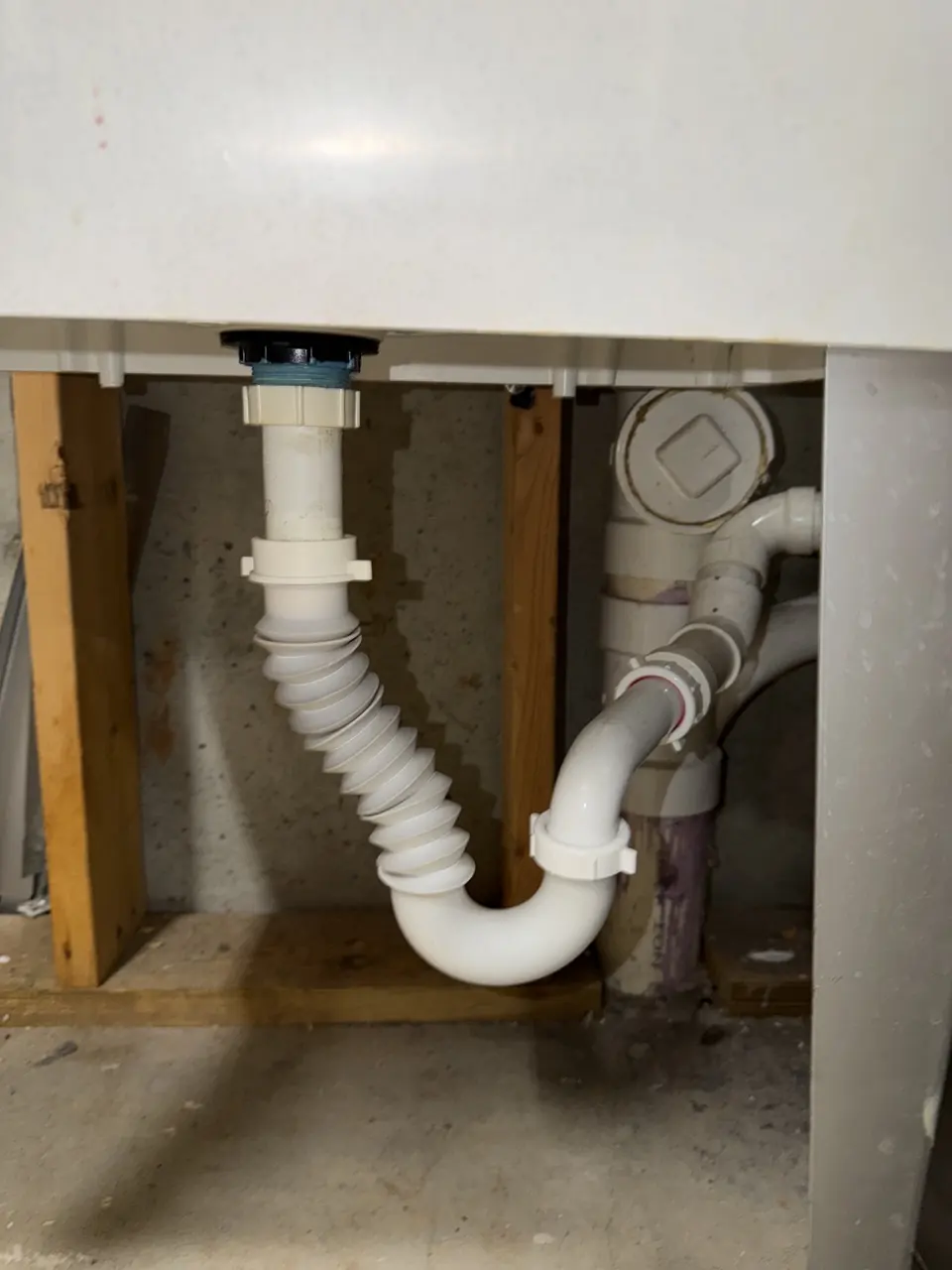
Drain problems inside the house, like this flexible trap under a sink, are part of the regular inspection. The sewer scope covers what happens after the water leaves the house.
Warning signs to watch for
- Several drains running slowly at the same time
- Gurgling from toilets or floor drains when other fixtures drain
- Sewage odors inside or in the yard
- Unusually green or soggy patches of lawn over the line
- Water backing up into a basement floor drain or lower-level shower
How a sewer scope works
- Find an accessible cleanout, usually outside near the foundation or in a basement or crawlspace.
- Run the camera through the line toward the public main or septic tank while recording.
- Review the footage, noting the pipe material and any roots, cracks, offsets, sags or blockages.
- Deliver the video and a written summary, with a recommendation when a licensed plumber should evaluate a repair.
If there is no accessible cleanout, we will explain the options, which may include having a plumber install one. A sewer scope follows the line toward a septic tank, but a full septic evaluation should be done by a licensed septic contractor.
Sewer scopes for sellers and new homes
Sellers of older homes can scope the line before listing, so a cracked or root-filled lateral becomes a repair or a known disclosure instead of a surprise in the buyer's report. It pairs well with a pre-listing inspection. Buyers of brand-new homes can benefit too, because a line damaged by heavy equipment during construction is much easier to get fixed while the builder is still responsible for it.
Quick answers
Will the camera damage the pipe?
No. The camera sits on a flexible cable that is fed gently through the line. It doesn't cut, jet or clear anything, which also means it can't see past a full blockage.
Can I scope the line if the house is occupied?
Yes. We just ask that nobody runs water or flushes toilets while the camera is in the line, so the view stays clear and the recording is easy to read.
Do I need to be there?
It helps but isn't required. You receive the video and a written summary either way, and we are happy to walk you through the footage by phone.
What to do with the results
If the line looks good, you have peace of mind and a baseline video for the future. If we find a problem, send the video to a licensed plumber for a repair quote while you are still in your due diligence period. Depending on the damage, repairs range from cleaning roots and a spot repair to lining the pipe or replacing the line, and costs rise quickly when the line runs under a driveway or deep in the yard. That quote becomes the basis for a repair request or a credit.
Sewer problems are one of the findings that most often change a deal, which we cover in what can fail a home inspection. We scope sewer lines across metro Atlanta, and we recommend it most often in older neighborhoods of Smyrna, Marietta, Austell and Sandy Springs. Add a sewer scope inspection to your home inspection, or call or text (678) 558-4222 to book one on its own.