

The quick answer
Nothing technically fails a home inspection, because an inspection is an evaluation, not a pass or fail test. But some findings regularly derail deals: structural or foundation movement, a roof at the end of its life, active water intrusion, serious electrical hazards, a damaged sewer line, a failing HVAC system, high radon, significant pest damage and unpermitted work. Those issues lead to repair requests, price changes and sometimes buyers walking away during due diligence.
Why inspections don't pass or fail
A home inspection documents the condition of the home on the day of the inspection. The inspector doesn't approve or reject the house, and neither does the report. Instead, the buyer decides what the findings mean to them. A 20-year-old roof might be a deal breaker for one buyer and a planned expense for another.
That is also why the same report can lead to very different outcomes. In practice, deals change course when a finding is expensive, unexpected or affects safety, especially when it shows up late in the due diligence period with little time to get quotes.
The issues that derail deals most often
Structural and foundation movement
Wide or growing cracks, sloping floors, bowing basement walls, failing crawlspace piers and damaged framing get attention fast because repairs can be expensive and the cause has to be understood. We document what we see and recommend a structural engineer when the pattern calls for one.
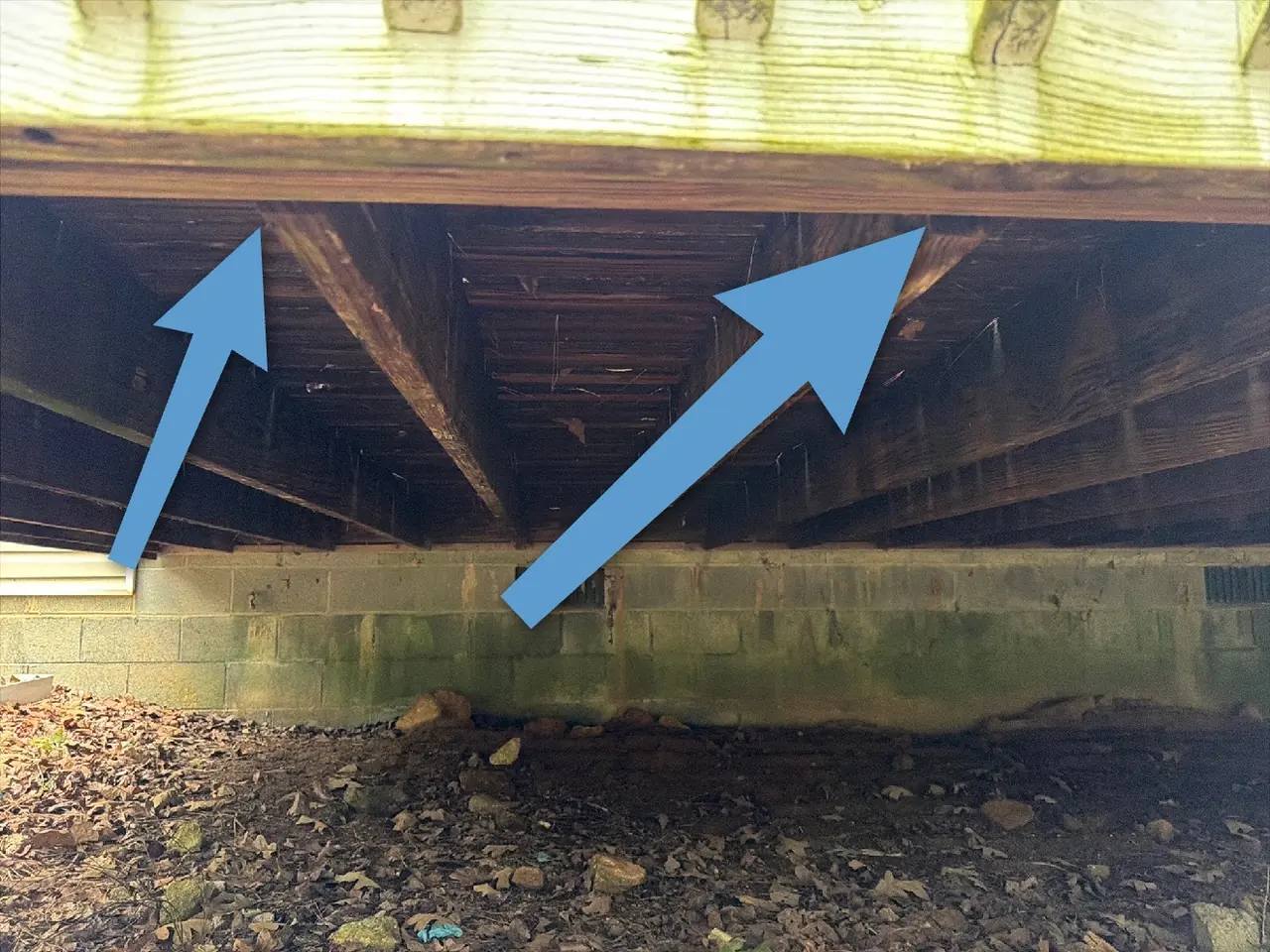
Structure includes more than the foundation. Deck framing like this, viewed from underneath, shows how joists and connections are holding up. Decks fail at their connections, so this is where we look hardest.
A roof at the end of its life
A roof replacement is one of the largest single expenses a buyer can face. Widespread granule loss, curling, soft decking and multiple leaks often lead to a request for a credit or a replacement before closing.
Active water intrusion
Water in the crawlspace or basement, wet stains confirmed with a moisture meter and rot at windows and doors point to ongoing damage. Buyers worry about what they can't see, and that is reasonable. Water problems are usually fixable, but the source needs to be found first.
Serious electrical hazards
Overheated components, panels with known safety concerns, wiring that is too small for its breaker, extensive amateur wiring and ungrounded circuits throughout the house all require a licensed electrician and often lead to renegotiation.
Sewer line damage
A collapsed or root-filled sewer lateral can cost thousands of dollars to replace and may involve digging up a yard or driveway. It is invisible during a normal inspection, which is why a sewer scope inspection on older homes is so valuable. In neighborhoods with original clay or Orangeburg pipe, such as parts of Smyrna, this finding comes up regularly.
HVAC systems that don't work
An old system that still runs is a budgeting item. A system that doesn't cool, has a cracked heat exchanger or is leaking refrigerant is a negotiation item, especially before a Georgia summer.
High radon, mold and pest damage
A radon result at or above the EPA action level usually leads to a request for a mitigation system. Mold tied to ongoing moisture leads to remediation discussions. Termite damage leads to treatment and repair conversations. All three are fixable, and all three are easier to handle when found early. Learn more in radon testing explained and our mold inspection guide.
Unpermitted additions and conversions
Finished basements, enclosed porches and garage conversions done without permits raise questions about safety and insurability. Inspectors don't verify permits, but we note work that looks amateur or out of place so your agent can ask the right questions.
Findings that look scary but usually aren't
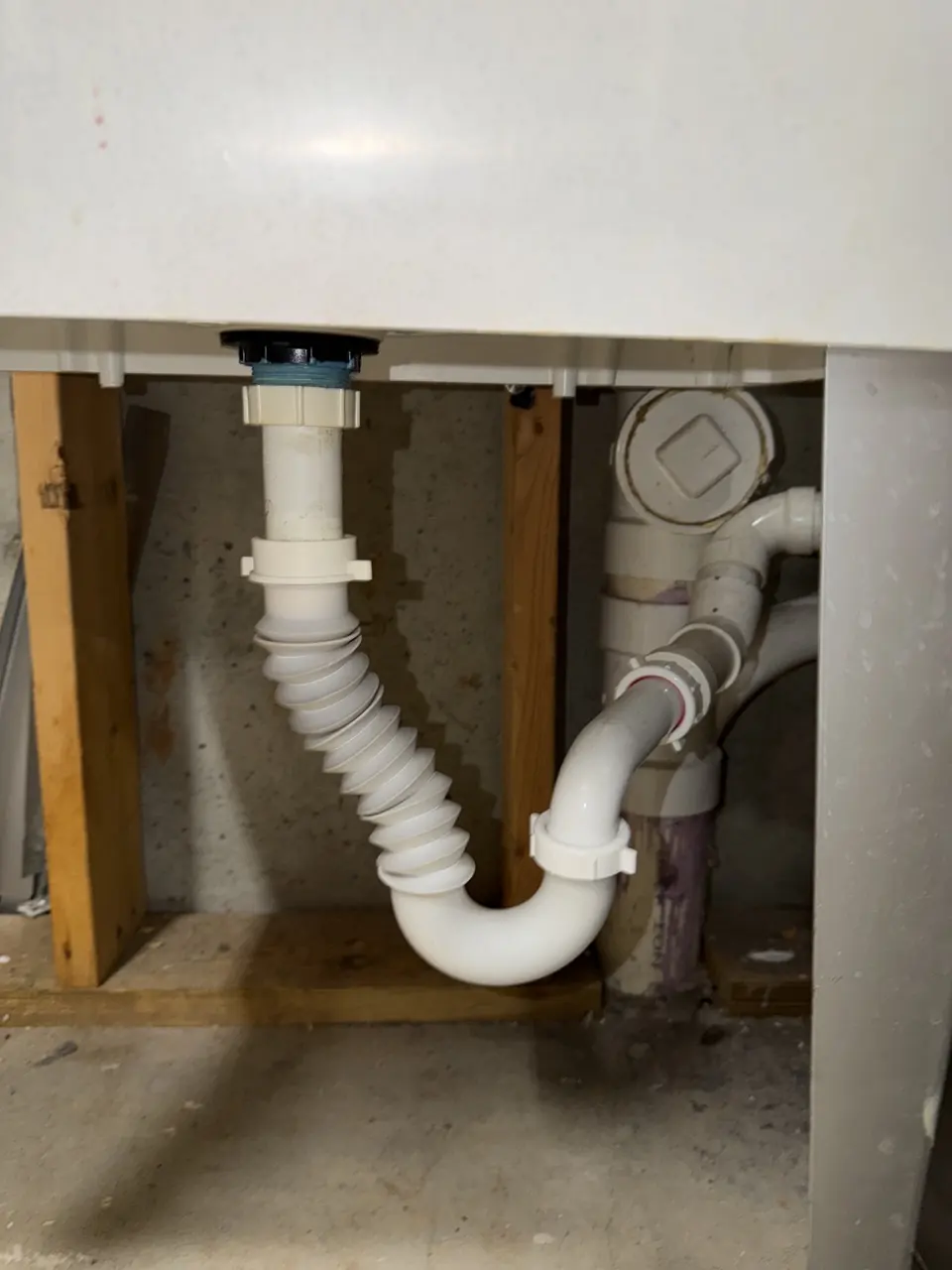
Plenty of findings sound alarming and are actually simple fixes. The sink drain in the photo at the top of this article uses a corrugated flexible pipe as a trap, which isn't an approved installation and collects debris. It shows up in a report with a photo and a recommendation, but a plumber can replace it with a proper trap quickly. Other common examples:
- Missing GFCI protection at a few outlets
- A double-tapped breaker that an electrician can correct
- Missing caulk or sealant around windows and tubs
- Downspouts that need extensions
- Minor wood rot at a piece of trim
- An HVAC system that is due for service
| Often deal-changing | Usually negotiable or minor |
|---|---|
| Foundation or structural movement | Hairline concrete shrinkage cracks |
| Roof at the end of its life | A cracked pipe boot or a few lifted shingles |
| Active water intrusion | Old, dry water stains with the cause fixed |
| Serious electrical hazards | Missing GFCI protection, a double tap |
| Collapsed or root-filled sewer line | A slow sink drain or an improper trap |
| HVAC that doesn't heat or cool | An older system that still works well |
When lenders and insurers get involved
Some findings matter beyond the buyer's own decision. Government-backed loans such as FHA and VA have minimum property requirements, and an appraiser may call for repairs to items that affect safety, soundness or security before the loan closes. Some insurance companies also look closely at older roofs, certain electrical panels and older plumbing materials. If your report includes items like these, talk with your lender and your insurance agent early in the due diligence period.
What buyers can do
- Schedule early so you have time for specialists and quotes before your due diligence ends.
- Bring in specialists for anything the report flags for further evaluation.
- Focus your request on safety items, active water problems and major systems.
- Consider credits so you control the repair quality after closing.
- Keep perspective. Every home has findings. The question is whether the price reflects them.
If you are buying for the first time, our first-time home buyer inspection tips walk through the whole process.
What sellers can do
Sellers can take most of the drama out of the process with a pre-listing inspection. Fixing small items in advance and getting quotes for big ones means the buyer's report holds few surprises. Our article on why pre-listing inspections help sellers explains the strategy.
To schedule a buyers home inspection anywhere in metro Atlanta, call or text (678) 558-4222.