

The quick answer
An attic inspection is a visual check of everything above your ceiling: the insulation layer, the ventilation, the underside of the roof deck, the wiring, the ductwork and any heating and cooling equipment that lives up there. In metro Atlanta it matters more than most buyers and sellers expect, because attic problems rarely announce themselves. They show up later as a ceiling stain, a stubborn hot room, a high power bill or an air conditioner that quits in July.
A good attic inspection takes a flashlight, a moisture meter and an infrared camera, and it ends with photos of what was found so you can hand the report to a contractor and get a straight answer.
Why Georgia attics need a close look
Our summers are long, hot and humid, and that combination is hard on an attic. On a summer afternoon the air under a shingle roof can climb well past 120 degrees. That heat bakes the roof deck from below, wears out duct insulation and pushes against every weak spot in the ceiling. Humid air also leaks up from the living space through gaps around lights, wires and the attic hatch, and in cooler months that moisture can condense on cold roof sheathing and feed mold.
Thin or uneven insulation makes the problem worse. If the ceiling can't hold back the heat, the air conditioner runs longer, and with a cooling season that stretches across most of the year, that cost repeats every month. It is also one of the cheaper defects to fix, which is why we look at it on every full buyers home inspection.
What we check in the attic
Access and the attic hatch
We start at the opening. A pull-down stair or hatch that is uninsulated, loose or full of gaps leaks conditioned air all day long, and a hatch that is badly installed is a safety problem as well. When an attic is too tight, too hot or too cluttered to enter safely, we inspect what we can reach from the opening and say so plainly in the report instead of guessing.
Insulation type, depth and coverage
We identify the material, whether loose-fill fiberglass, loose-fill cellulose, batts or spray foam, and then look at depth and coverage. ENERGY STAR suggests insulating most attics to about R-38, which works out to roughly 10 to 14 inches depending on the material, and its quick check assumes about R-3 for every inch of depth. You can read more on the ENERGY STAR attic insulation page.
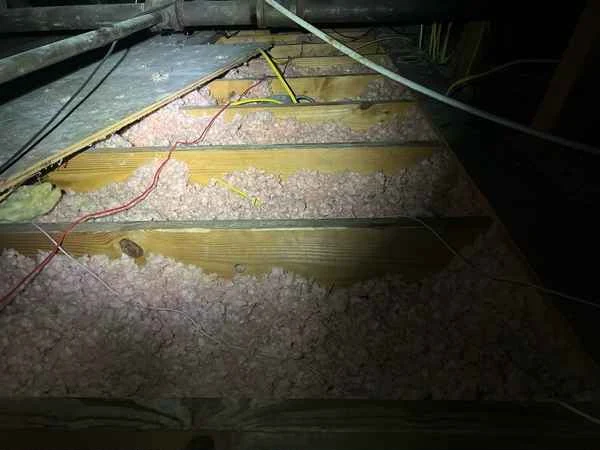
The photo above shows the pattern we see all the time. The joist tops are still visible, which means the layer is only as deep as the framing and well short of that target. We also look for bare spots, voids around the hatch, insulation compressed under stored boxes, and insulation pushed into the eaves where it blocks the soffit vents. Baffles at the eaves keep that airflow open. Junction boxes should stay accessible, so a box buried under insulation is a defect too.
Ventilation and moisture paths
A common building code rule of thumb calls for about 1 square foot of net vent area for every 150 square feet of attic floor, with 1 per 300 allowed in some balanced setups. More important than the exact number is whether air can actually flow from low intake vents at the soffit to exhaust vents at the ridge or gables. We also check where the bathroom fans and dryer vents end. A fan duct that stops in the attic dumps moisture onto the roof deck every time the fan runs, and it should run all the way to the outdoors.
Roof deck and framing
From below, the roof deck tells a story. Dark staining, delaminated plywood or OSB, rusty nail tips and patches that look like mold point to a leak or to chronic condensation. We also look at the framing for sagging, cracked members and trusses that were cut or notched during a past remodel or equipment install, since that kind of damage is easy to miss from the ground.
Wiring
Attic wiring is where amateur work hides. We look for open junction boxes, splices made outside a box, damaged cable jackets, loose cables lying on the insulation and boxes that have been buried. Older homes can still carry cloth-covered or knob-and-tube wiring, and where we see it we recommend an evaluation by a licensed electrician.
Ductwork and equipment
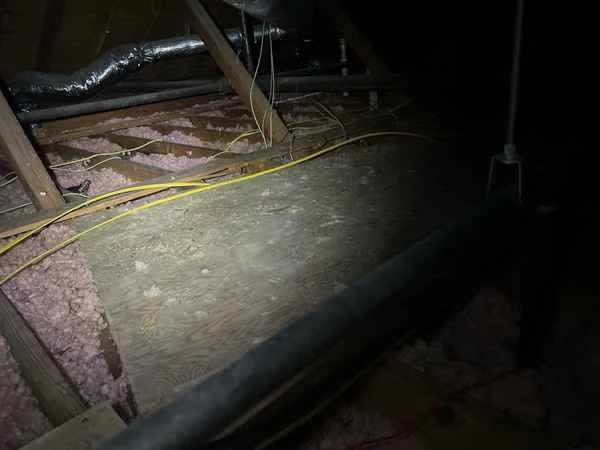
Flexible duct is common in metro Atlanta attics, and it fails in predictable ways: kinks that choke airflow, sections that sag and collect water, joints that have pulled apart and insulation that has torn away so the duct sweats. If the air handler is in the attic we check the condensate drain, the safety float switch and the secondary drain pan. A clogged drain line is one of the most common causes of an unexpected ceiling leak.
Pests and past moisture
Droppings, nests, chewed wires and flattened insulation tell us a rodent or other animal has been using the space. We also scan with infrared and a moisture meter, since wet insulation and damp framing often don't look wet to the naked eye.
What the ceilings below can tell us
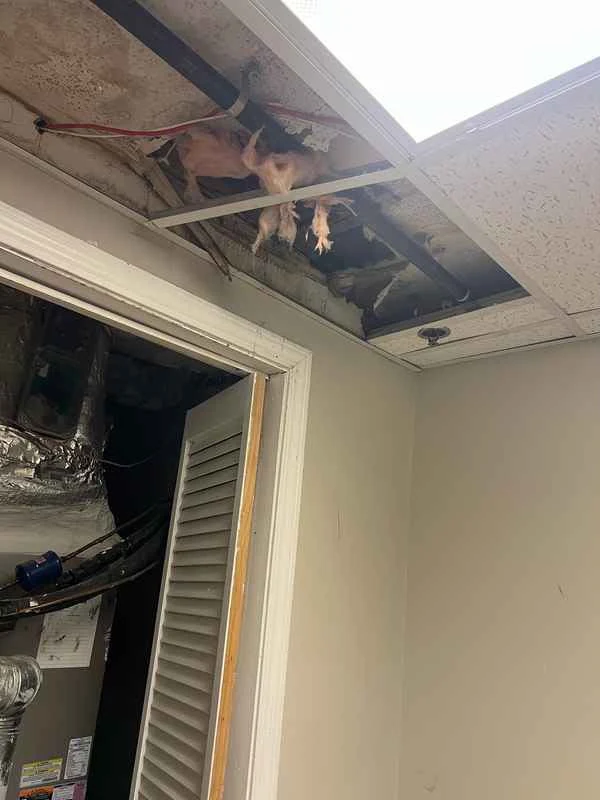
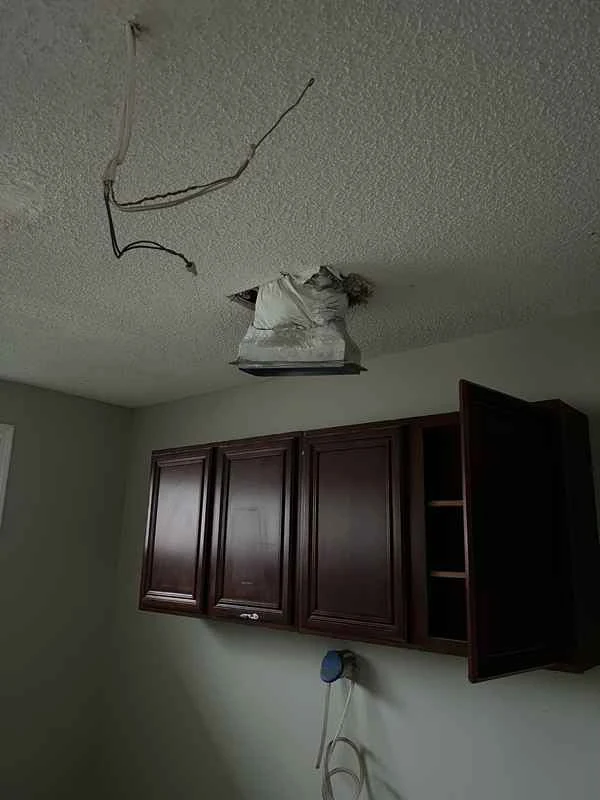
Not every attic problem is visible from the attic. A trained eye reads the ceilings in the rooms below, too. Stains and sagging tiles show where water has come through, and damage near a mechanical closet often traces back to a drain line or a sweating duct above it. Open penetrations in a ceiling, such as an uncapped duct or loose wires where a fixture or fan was removed, leak air and create a safety issue at the same time. Vacant homes and recent flips are the most likely to have these leftovers.
Common attic findings
| Finding | Why it matters | Usual next step |
|---|---|---|
| Thin or uneven insulation | Higher cooling bills and hot rooms | Seal air leaks, then add insulation |
| Blocked soffit vents | Heat and moisture stay trapped | Clear the vents and install baffles |
| Bath fan venting into the attic | Moisture and mold on the roof deck | Run the duct to the outdoors |
| Open boxes or loose splices | Shock and fire risk | Licensed electrician |
| Kinked or disconnected ducts | Poor cooling and condensation | HVAC contractor |
| Roof deck staining | A past or active leak | Trace the source, then a roofer |
What an attic inspection can't see
An attic inspection is visual and non-invasive. We don't move stored belongings, cut into drywall or walk where the framing or the ceiling below can't safely take our weight. Deep insulation can hide wiring and framing, and some areas, like tight eaves, can't be reached at all. Anything we couldn't see is listed in the report, so a clean attic section means we looked and found nothing, not that every inch was visible.
A safe check you can do yourself
Between inspections, you can learn a lot from the hatch. Shine a bright flashlight across the attic and look for these signs:
- Insulation that sits at or below the top of the joists
- Daylight around the roof edges or vent penetrations
- Dark stains, damp insulation or a musty smell
- Ducts that are kinked, sagging or pulled apart
- Wires lying loose or boxes with no cover
When to schedule one
The best times are before you buy, before you list and after a major storm or HVAC replacement. Buyers get the facts they need to negotiate, and sellers can fix cheap items first through a pre-listing inspection. If the roof is part of your worry, a roof inspection adds drone photos of the surface, and our guide to what a roof inspection includes explains how the two views fit together.
We inspect attics in homes across Cobb County and the rest of metro Atlanta, including Marietta, Kennesaw, Smyrna and Alpharetta. To see which findings usually change a deal, read what can fail a home inspection. Water also gets in from outside, which we cover in exterior water problems inspectors look for. Call or text (678) 558-4222 to book, and tell us if you want the attic given extra time.