

The quick answer
Radon testing measures the level of radon gas in a home, usually over at least 48 hours with the house closed up. The EPA recommends fixing a home when the average reaches 4 picocuries per liter or higher. Radon has no smell, color or symptoms, so testing is the only way to know your level. In metro Atlanta, where the EPA places Cobb, Fulton, DeKalb and Gwinnett counties in its highest radon potential zone, testing is especially worthwhile.
What radon is and how it gets inside
Radon is a naturally occurring radioactive gas produced when uranium in soil and rock breaks down. Outdoors it disperses harmlessly. Indoors it can build up. Houses tend to pull air from the soil beneath them, especially when the inside is warmer than the ground, and radon enters through:
- Cracks in slabs and foundation walls
- Gaps around pipes, wires and sump pits
- Open soil and gaps in crawlspaces
- Construction joints between slabs and walls
According to the EPA, radon is the number one cause of lung cancer among people who have never smoked and the second leading cause overall, responsible for an estimated 21,000 lung cancer deaths in the United States each year. The risk comes from long-term exposure, which is why a test now protects years of living in the home.
Radon in metro Atlanta
The EPA map of radon zones groups counties by their predicted average indoor radon level. Zone 1 counties have a predicted average above 4 picocuries per liter. Four of the core metro Atlanta counties fall in Zone 1:
- Cobb County, including Marietta, Kennesaw, Smyrna and Mableton
- Fulton County, including Alpharetta and Sandy Springs
- Gwinnett County, including Peachtree Corners
- DeKalb County
A zone describes an average across a whole county, not the level in any one house. Two neighboring homes can test very differently because of foundation type, soil and how airtight each house is. Homes in Cherokee and Forsyth counties, which are not in that Zone 1 group, can still test above the action level. That is why the EPA recommends testing every home regardless of zone.
How radon testing works
We use a continuous radon monitor, an electronic device that records radon levels every hour. Here is how a typical test runs:
- Closed-house conditions. Exterior doors and windows stay closed, except for normal entry and exit, for at least 12 hours before and throughout the test. Fans that bring in outside air should be off. Normal heating and air conditioning can run.
- Placement. The monitor is placed in the lowest livable level, away from exterior walls, vents, windows, kitchens and bathrooms, at roughly breathing height.
- Testing period. The monitor runs for at least 48 hours, recording hourly readings.
- Report. You receive the average level plus the hour by hour data, which also helps us spot tampering or open windows.
Continuous monitors give results right away when the test ends, which fits neatly inside a typical due diligence period. Charcoal kits can work for homeowners testing on their own, but they need to be mailed to a lab and don't show the hourly pattern.
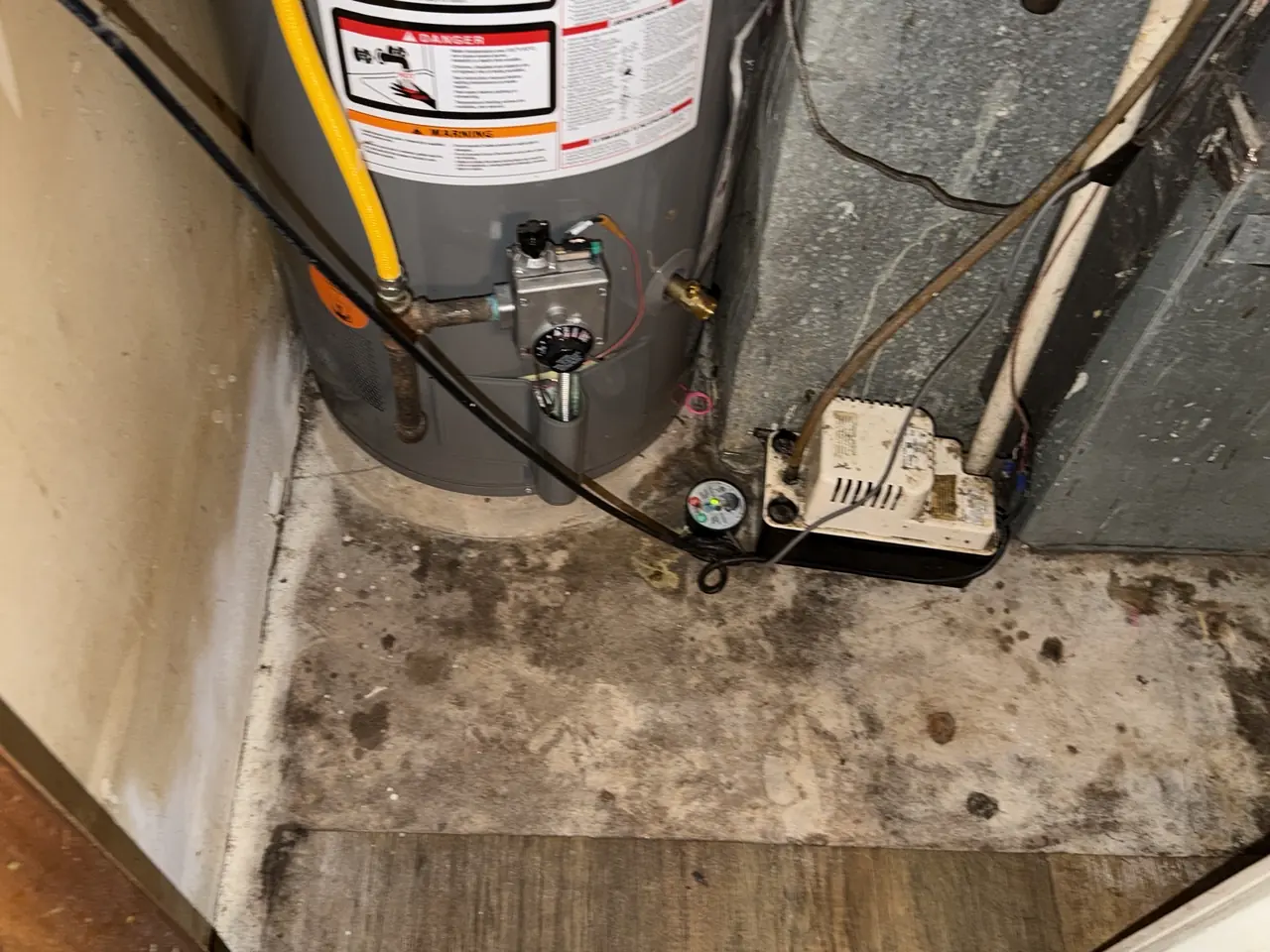
Lower levels like this mechanical area are where we pay close attention to openings in the slab, sump pits and foundation cracks that can let soil gas into the home.
What your result means
| Average result | What the EPA recommends |
|---|---|
| Below 2 picocuries per liter | No action needed. Consider retesting in the future or after major renovations. |
| 2 to 3.9 picocuries per liter | Consider mitigation. There is no completely safe level of radon. |
| 4 picocuries per liter or higher | Fix the home with a radon mitigation system. |
If your home tests high
A high result is a solvable problem. The most common fix is sub-slab depressurization: a mitigation contractor installs a pipe through the slab or crawlspace membrane and a fan that pulls radon from beneath the house and vents it above the roofline. Systems often cost roughly $1,000 to $2,500 depending on the home, and they typically reduce radon levels dramatically. A follow-up test confirms the system is working.
Choose a qualified mitigation contractor, ask for a post-mitigation test and keep the paperwork. If you sell later, buyers will want to see both.
Radon testing during a home purchase
If you are buying, add radon testing to your home inspection so the monitor is placed at the start of your due diligence period. Results arrive about two days later, leaving time to request mitigation from the seller if needed. Our Total Protection Package bundles a full buyers home inspection, a mold inspection and radon testing.
If you are selling, a test before listing answers a question buyers in Cobb, Fulton and Gwinnett counties will likely ask. Read more in why pre-listing inspections help sellers. To schedule a radon test anywhere in metro Atlanta, call or text (678) 558-4222.